


July 15, 2026
Lawn maintenance in Papakura presents unique challenges due to fast-growing grass, seasonal weather shifts, and the need for consistent care. Many homeowners struggle to keep up with these demands, leading to overgrown lawns, patchy growth, and unnecessary stress.
If you’ve been left wondering “why is my lawn not growing the way it should?”, the cause is usually one of a handful of repeat offenders. Here are the seven biggest reasons, and how to fix each one.
Why is My Lawn Not Growing? The Most Common Culprits
Most common lawn problems in South Auckland come down to soil, watering, mowing habits, feeding, thatch, pests, or sunlight. Let’s go through them one by one.
1. Compacted or Poor-Quality Soil
South Auckland’s clay-heavy soil compacts easily under foot traffic, parked trailers, or heavy rain. Compacted soil restricts water and nutrients from reaching the roots. Aeration loosens compacted soil, allowing oxygen, water, and nutrients to reach the roots effectively. Spreading high-quality grass seed over thin patches ensures uniform growth and a dense, vibrant lawn.
A quick way to check is to push a garden fork into the lawn. If it barely goes in, compaction is likely part of the problem.
2. Watering the Wrong Way
During summer, intense heat and dry conditions put stress on the grass, which is when the real question of how to get a green lawn starts to matter. Without proper care, it can become brittle, develop brown patches, or stop growing altogether.
Watering deeply but less frequently encourages roots to grow downward, reducing drought stress. Early-morning or late-evening watering prevents evaporation and maximises absorption. Strategic watering is essential to ensure deep hydration rather than frequent surface watering.
3. Mowing Too Short or Too Often
A freshly cut lawn looks great, but beyond appearance, healthy grass grows stronger when trimmed at the right height. Many homeowners use outdated equipment or mow too short, causing damage.
Mowing should be done at a slightly higher setting to provide shade for the soil and reduce moisture loss. Cutting at an optimal height of 5-7 cm strengthens the lawn and prevents thinning. This also encourages robust root development, ensuring grass grows evenly and maintains a uniform appearance. This is the first place to look if you’re chasing the secret of how to make grass grow faster.
4. Nutrient-Starved Grass
Grass that isn’t fed properly will always struggle, no matter what else you get right. Seasonal fertiliser applications ensure grass receives essential nutrients, promoting sustained health. Using organic compost or slow-release fertilisers strengthens the root system and improves soil quality. This is one of the simplest wins if you’re working out how to improve lawn health in the long term.
5. Thatch Build-Up Choking the Roots
Thatch is the layer of dead grass, roots, and debris that builds up between the soil and the blades you see on top. A thick layer blocks water, air, and nutrients from reaching the roots, so your lawn thins out even though everything looks fine on the surface. To check, cut a small wedge out of your lawn with a spade. Anything thicker than about 1cm is worth removing.
Expert lawn mowing services in Papakura include the right techniques to support healthy root development, prevent thatch build-up, and manage grass growth efficiently. Regular cutting prevents overgrowth, discourages moss build-up, and keeps the lawn looking tidy.
6. Pests and Grubs Feeding on the Roots
Overgrown grass provides a breeding ground for insects and rodents. Routine mowing removes their hiding spots and discourages infestations. A consistently cut lawn limits the presence of mosquitoes, ticks, and other pests that thrive in long grass.
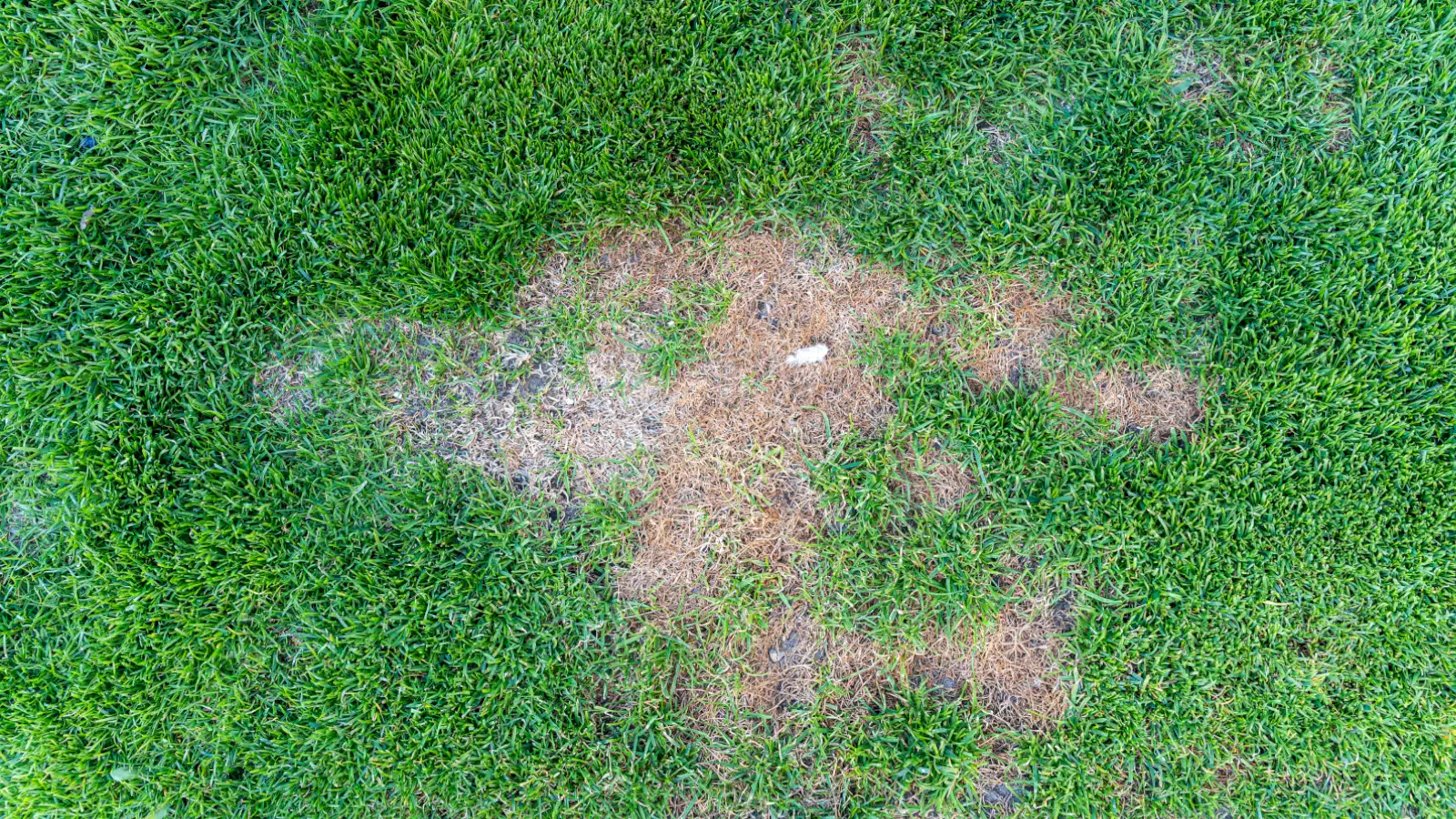
That covers pests hiding in long grass, but some pests attack the lawn itself. Grass grub and porina caterpillar feed directly on grass roots and crowns, and the damage often appears as random brown or bald patches that spread over a few weeks.
Affected patches often lift away easily, almost like loose carpet, when you tug on the grass. If patches keep appearing despite good watering and feeding, check for grub activity before you change anything else.
7. Not Enough Sunlight
Grass is a sun lover, and no amount of watering or feeding makes up for a shady spot on your property. Sunlight and shade balance prevent uneven growth, making it necessary to trim trees and remove obstacles that block natural light.
How to Fix a Dying Lawn: Step-by-Step Recovery
If your lawn is beyond a patchy spot or two, how to fix a dying lawn comes down to order of operations. Here’s the sequence that actually works:
- Aerate first to relieve compaction
- Dethatch to clear the way for water and nutrients
- Overseed bare and thin patches with quality seed
- Feed with a slow-release fertiliser
- Water deeply and consistently while new growth establishes
This sequence matters. Feeding or seeding compacted, thatch-choked soil wastes time and product, since nothing can actually reach the roots. Follow the right order, and your lawn will likely show visible recovery within a few weeks.
How to Get a Green Lawn, and Keep it That Way
A lush, green lawn requires a balanced approach to care. Regular mowing keeps grass at an optimal height and prevents overgrowth. Deep watering ensures roots grow strong and resilient, avoiding shallow and weak development.
Proper fertilisation provides essential nutrients, using a mix of organic compost and slow-release fertilisers for sustained growth. Aeration and dethatching improve soil structure by allowing air, water, and nutrients to reach the roots.
Good-quality grass seed enhances resilience, particularly when using drought-resistant varieties suited to New Zealand’s climate. Professional lawn care providers also adjust mowing height based on seasonal conditions, ensuring the grass remains strong and resistant to disease.
Once you’ve got the lawn back to health, the goal moves from fixing to maintaining that rhythm all year round, not just when things start looking rough again.
Common Questions About Lawn Health
How long does it take for a dying lawn to recover?
Most lawns show noticeable improvement within a month of consistent care, though full recovery from serious damage can take an entire growing season.
Can I fix a dying lawn myself, or do I need a professional?
Minor issues, like uneven mowing or underwatering, are easy DIY fixes. But if you’re dealing with heavy compaction, grub damage, or large bare patches, a professional assessment saves you from guessing and wasting money on the wrong fix.
What’s the fastest way to green up a lawn?
A slow-release fertiliser paired with proper watering yields the quickest visible results, usually within a week or two. However, it won’t fix an underlying soil or pest problem on its own.
How do I know whether my lawn is dead or just dormant?
A dormant lawn goes pale brown all over fairly evenly, usually during a cold snap or dry spell, and greens back up once conditions improve. Patchy, uneven browning that doesn’t respond to rain or warmer weather usually points to one of seven causes above, not simply dormancy.
Ready for a Greener Lawn?
A well-maintained lawn improves property appeal, prevents weed growth, and reduces pest infestations, making outdoor areas more enjoyable and easier to manage. This contributes to a good first impression, as an unkempt garden can lower kerb appeal. Neatly trimmed grass creates an inviting outdoor space, making homes more attractive to potential buyers or visitors.
Lifestyle Lawns offers tailored lawn-mowing advicesolutions catering to seasonal and specific lawn types, helping you avoid these common lawn problems. Investing in expert care keeps grass green, healthy, and ready for use year-round. Book a professional lawn mowing service in Auckland today and take the stress out of lawn maintenance.