


April 2, 2026
Most outdoor spaces look great the first summer. Then reality kicks in—the weeds come back, the garden beds overflow, and the section that was manageable suddenly needs a full weekend every month just to stay on top of.
More often than not, it’s not a lack of effort. It’s a layout, planting choice, or material that was never going to suit the property or the lifestyle in the first place.
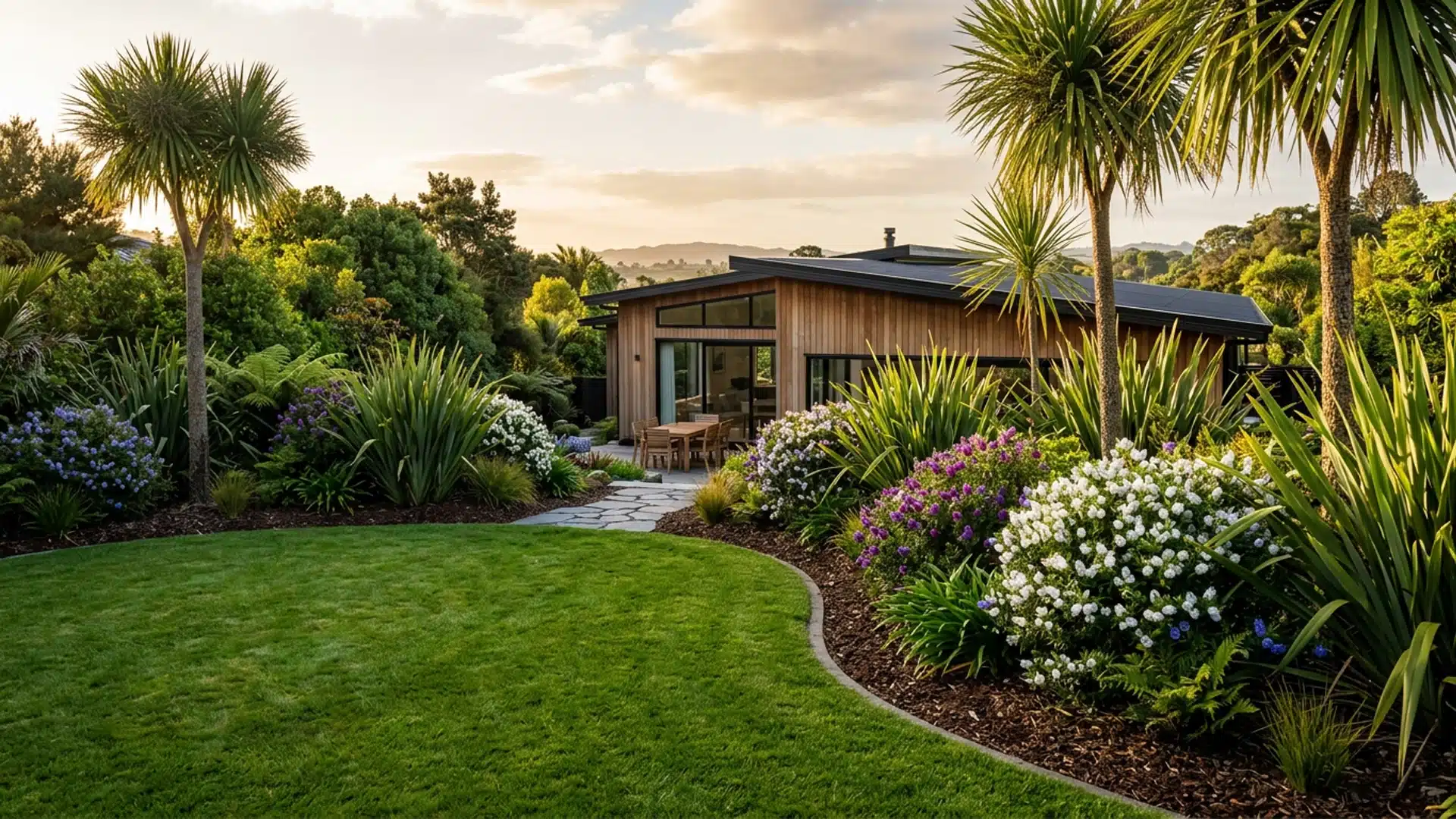
This guide shares practical landscaping ideas for New Zealand homes, with low-maintenance upgrades, garden landscaping ideas for all section sizes, and a few notes on when professional planning genuinely pays off.
Quick Answer:
- Low-maintenance landscaping reduces the amount of lawn, exposed soil, and thirsty plants that require constant attention.
- Native NZ plants are the simplest upgrade since they’re adapted to local conditions and need little maintenance.
- Mulch, gravel, and defined garden edges cut weeding time significantly.
- Hardscaping, such as paths, patios, and retaining walls, adds structure while reducing the area that requires regular mowing.
- For slanted areas, drainage problems, or complex layouts, professional planning can save significant rework costs later.
Why Low-Maintenance Landscaping Ideas Matter for New Zealand Homes
Why busy homeowners need easier outdoor spaces
Most Kiwi homeowners want an outdoor space they can actually enjoy, not one that demands another job’s worth of hours each week. But the average suburban section has a mix of lawn, garden beds, and hard surfaces that weren’t necessarily designed together. The result is maintenance that creeps up faster than expected.
How the right layout reduces ongoing maintenance
A poorly planned layout creates friction at every turn:
- Awkward corners the mower can’t reach
- Garden beds that need constant edging
- Plants placed where they’ll always outgrow the space
When the layout suits how you actually use the section, the whole property becomes easier to manage.
Why New Zealand climate and site conditions matter
New Zealand’s climate varies dramatically from Northland to Otago. What might thrive in a humid Auckland backyard could struggle in a dry Canterbury summer or a Wellington site exposed to southerlies.
The most effective landscaping ideas account for the following:
- Rainfall
- Soil type
- Slope
These are way more important than just copying what looked good in a magazine.
Start With a Simple Garden Landscaping Plan
Define how you want to use the space
Before choosing plants or materials, think about how you actually want to spend time outside. Do you need a lawn for kids and a dog? A sheltered seating area? Space for veggies? Locking in your priorities first prevents you from spending money on features that don’t fit your way of life.
Create zones for lawn, planting, seating, and access
Breaking the section into zones gives the garden landscaping structure and makes ongoing maintenance simpler. A defined lawn area, a planting zone, and a hard surface for seating are the core building blocks most sections need.
Plan around sun, drainage, and slope
Before you buy a single plant, walk the section at different times of day and note:
- Where the sun falls in the morning, midday, and the afternoon
- Where water pools after heavy rain
- Which areas dry out quickly in summer
Getting this right up front means far fewer failures and far less money spent replacing things that never had a chance.
Choose Plants That Suit New Zealand Conditions
Why native plants are often easier to maintain
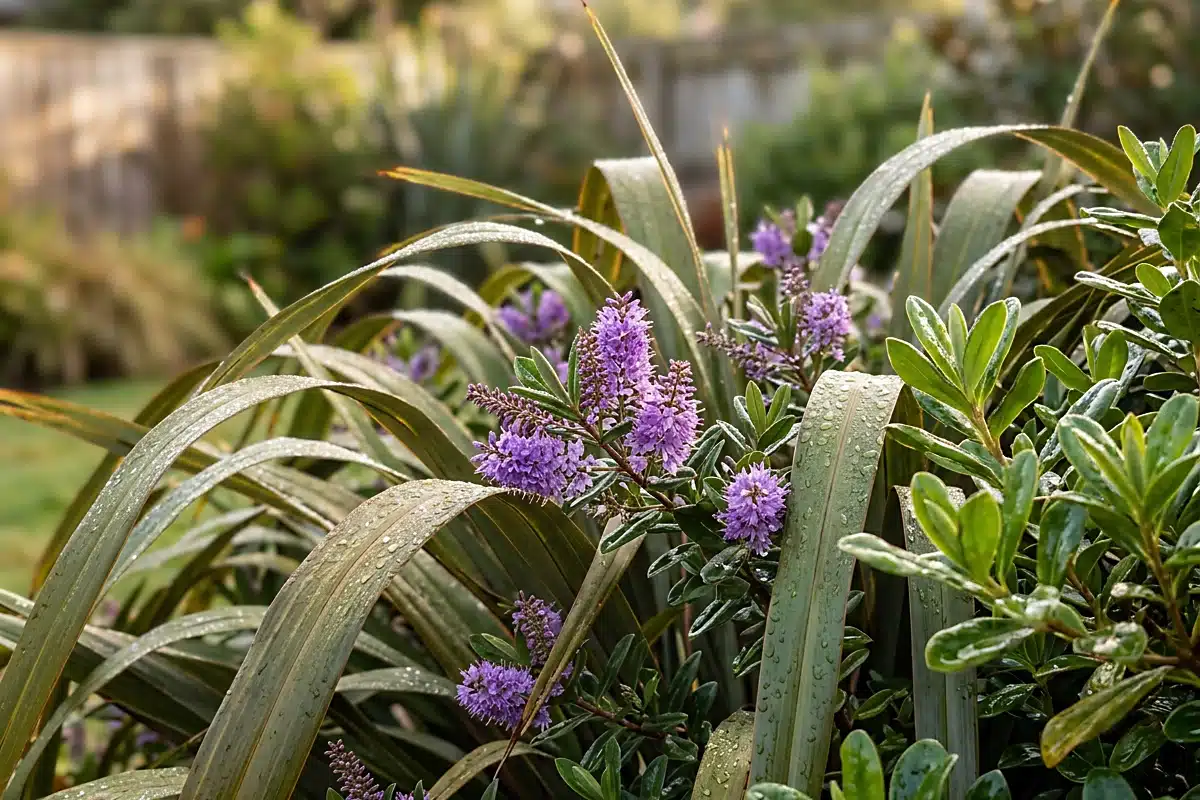
New Zealand natives have adapted to our soils, rainfall patterns, and temperatures over thousands of years. That means less watering once established, fewer pest problems, and no need for heavy fertilising. Hardy options widely available at NZ nurseries include:
- Flax (harakeke) and tī kōuka (cabbage tree) for structure
- Coprosma and Corokia for low-maintenance mid-layer planting
- Hebes for flowering colour with very little care
They also support native birds and insects, which costs you nothing extra.
Drought-tolerant and hardy plant choices
For drier sites, drought-tolerant options perform better. Examples of these are:
- Carex grasses
- Astelia
- Phormium
- Manuka
Non-native options like lavender, agapanthus, and rosemary also handle dry summers well once established.
How to reduce watering, pruning, and plant loss
Choose plants sized for the space they’ll grow into, not the space they fill at the nursery. Plants placed in the wrong light, wrong soil, or wrong microclimate need constant propping up. Get the match right, and you’ll spend far less time with the secateurs.
Garden Landscaping Ideas That Reduce Work Year-Round
Mulch and ground cover for weed control
A 75-100mm layer of bark mulch over garden beds is one of the most cost-effective upgrades any section can get. It suppresses weeds, retains moisture, and improves soil health as it breaks down. Ground cover plants like Muehlenbeckia, creeping thyme, or NZ cushion bush work well in exposed areas where mulch alone isn’t enough.
Gravel, bark, and stone for low maintenance areas
Decorative aggregates such as basalt chips, river pebbles, or crusher dust are increasingly popular in NZ garden landscaping. Laid over quality geotextile fabric, they need almost no ongoing care and handle heavy rainfall without turning to mud.
Raised beds and defined edges for a cleaner structure
Raised garden beds give you control over soil quality and make maintenance much faster. Concrete, timber, or steel edging between lawn and garden beds also stops the blurring that creates extra mowing and trimming work every visit.
Landscaping Ideas for Small Front Yards and Backyards
Space-saving planting and built-in features
Small sections work best when every plant and feature earns its spot:
- Columnar or upright plants add height without eating into floor space
- Built-in seating along a deck edge doubles the function of a single feature
- Vertical planting on fences adds greenery without shrinking your usable area
Garden landscaping ideas for family homes
For sections with kids and pets, keep a defined lawn area for active use and place more detailed planting in low-traffic zones, such as boundaries and front gardens. Use hardy, resilient ground covers in areas with the most foot traffic.
Low-Maintenance Lawn Alternatives and Smart Lawn Use
When to reduce lawn size
Lawns in shaded, sloped, or heavily trafficked areas tend to thin out and develop bare patches. Replacing struggling lawn areas with mulched garden beds, gravel, or paving is often the smarter long-term call.
Where lawn still works best
Lawn earns its place where it gets used: a flat, sunny area for kids, a dog, or outdoor entertaining. A smaller, well-maintained lawn is far easier to manage than a large patchy one. Defined edges and a clear mowing strip mean each cut is quick and clean.
Hardscaping Ideas That Improve Function Without Adding More Work
Paths, pavers, and patios that simplify movement
Here’s something most people don’t think about until it’s too late: if a path feels too narrow or awkward to use, people just won’t use it. They’ll cut across the lawn instead, and you’ll end up with worn, patchy grass that needs constant attention.
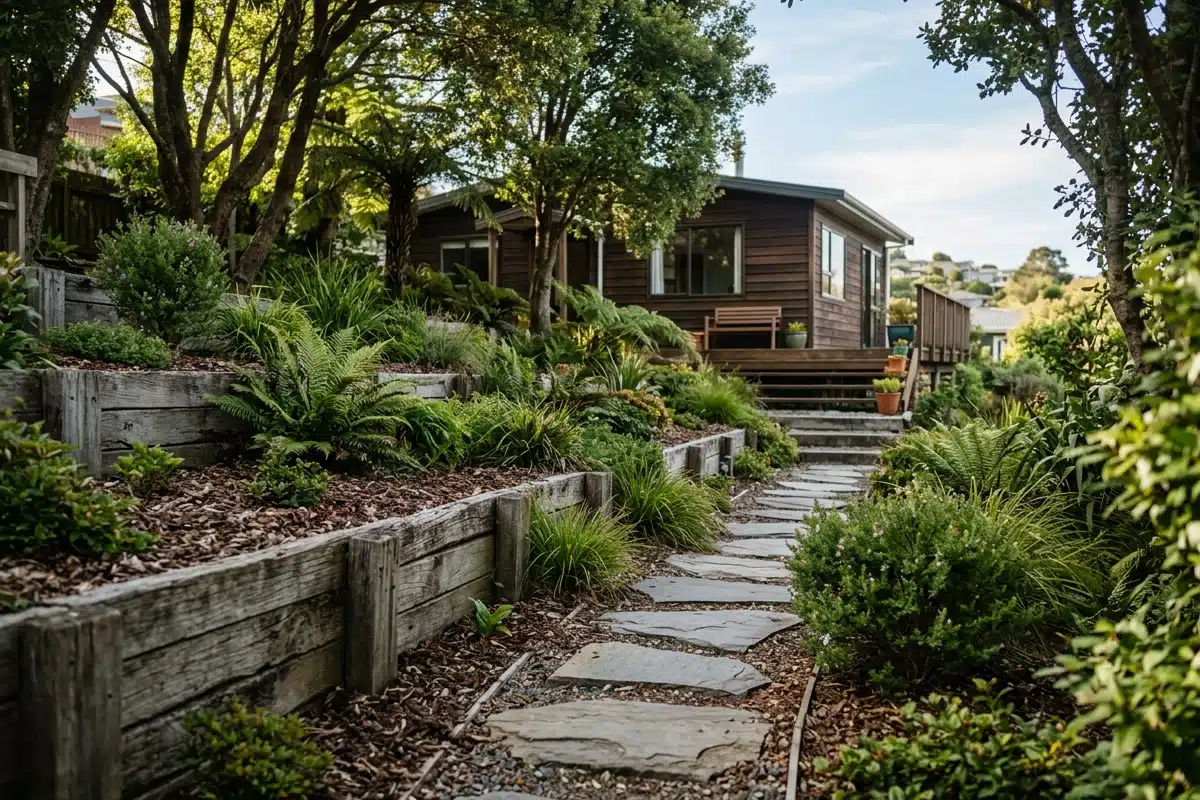
A well-placed path solves this before it starts. It protects the lawn from wear, guides movement naturally through the garden, and gives the whole space a tidier feel. Keep main paths at least 900mm wide, and you’ll actually use them.
Retaining walls and terracing for sloped sections
If you’re on a sloped section, you’re not alone. A huge number of New Zealand homes sit on uneven ground, especially in Wellington, Dunedin, and the hillier parts of Auckland. Left untouched, slopes can be frustrating to maintain and wasteful of space.
Retaining walls and terracing change that. They turn awkward gradients into flat, usable areas while keeping erosion and drainage under control. Material choice comes down to the look and the load:
- Timber sleepers for a natural, warmer feel
- Concrete block where you need height and structural strength
- Natural stone for character on lifestyle or rural properties
Seating, edging, and screening for a cleaner design
The finishing details matter more than most people realise. Clean edging between lawn and garden beds, built-in seating along a deck or retaining wall, and simple screening panels do two things at once: they make the space more usable day to day, and they make it far easier to keep looking tidy without constant attention.
When Landscape Architecture or Professional Planning Helps
Most garden improvements are something a motivated homeowner can absolutely take on themselves. But there are situations where bringing in a professional isn’t just helpful, it’s genuinely the smarter financial decision.
Landscape architecture adds real value when the project starts to involve:
- Significant earthworks or level changes
- Retaining walls over 1.5 metres
- Drainage that ties into the stormwater system
- Resource consent requirements
For complex or high-value properties, proper planning upfront almost always costs less than fixing expensive mistakes later. It’s the kind of thing that feels optional until it isn’t.
Ready to get your outdoor space sorted? Whether you need regular lawn maintenance to keep things looking sharp or you’re working through a larger garden overhaul, our team can help. Call 0272 852 968 or email us at lifestylelawns@xtra.co.nz
FAQs About Landscaping Ideas for New Zealand Homes
What are the best landscaping ideas for low-maintenance gardens?
The most effective combination is native or drought-tolerant planting, bark mulch over garden beds, defined edges between lawn and planting areas, and hardscaping to replace the sections of lawn that are hardest to maintain.
Which plants work best in New Zealand gardens?
Native plants are generally the easiest choice. Harakeke, coprosma, hebes, corokia, and tī kōuka are all hardy and suited to a wide range of NZ conditions. For more colour, lavender, agapanthus, carex grasses, and phormium varieties perform well without much intervention.
What are some easy garden landscaping ideas for small yards?
Focus on a limited plant palette, consistent paving materials, and multi-functional elements such as built-in seating or raised beds. Vertical planting on fences is useful where ground space is tight.
When should I consider professional garden landscaping help?
If your section has a significant slope, drainage issues, retaining walls to build, or you’re redesigning a large area from scratch, professional help is worth considering. It can save time, money, and costly mistakes, particularly where earthworks or structures are involved.
What is the difference between garden landscaping and landscape architecture?
Garden landscaping covers the practical and aesthetic work of designing and installing outdoor spaces, including planting, paving, lawn, and garden beds. Landscape architecture is a registered profession that involves technical design, site analysis, and, for larger or more complex projects, engineering input.