


October 15, 2024
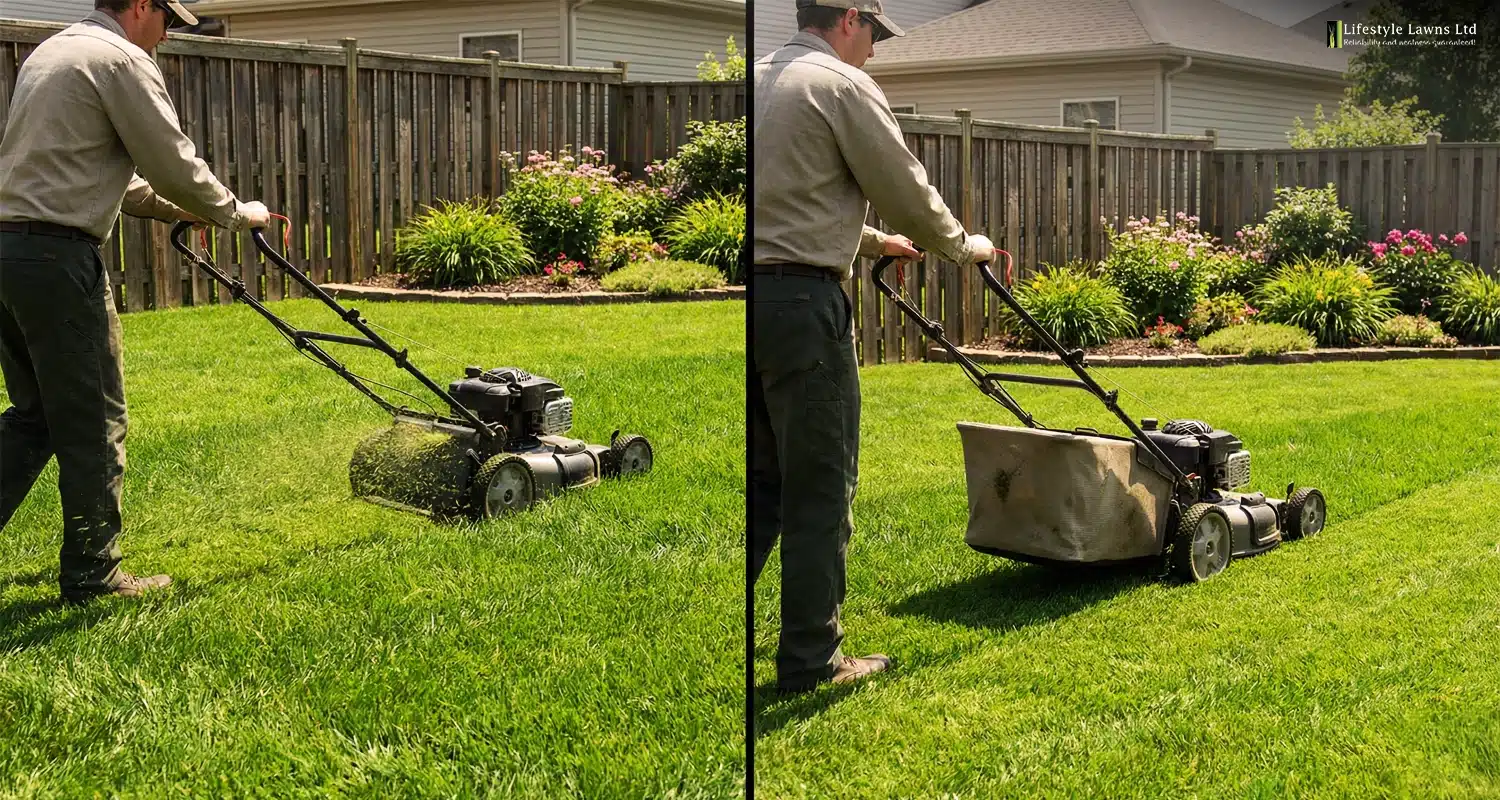
Taking care of your lawn means more than simply cutting the grass when it gets long. If you’re preparing to mow, there is one key decision you must make before you even start, and that’s whether to mulch the clippings or collect them in a catcher. The way you handle your clippings can have an impact on lawn health, your time, and the final appearance of your grass.
When choosing a new mower, you have to make a decision about mulching vs catching grass. You need to consider how much time you have, the type of lawn you have, and how often you’re committed to mowing. Here’s everything you need to know.
Mulcher vs Catcher: What’s the Real Difference?
Grass clippings can either go into a catcher or return to the lawn as mulch, and each method suits different needs. Your best option depends on how tidy you want the finish, how often you mow, and whether the grass is dry or damp.
Catching for a Clean Finish
Catching suits people who want the lawn to look sharp straight after mowing, because the mower collects clippings instead of leaving them behind. It also helps when grass grows fast, or when you want to remove weeds and seed heads before they spread.
Why Catching Works Well
Catching keeps the surface clean and gives a crisp finish, which is useful when your lawn sits near outdoor seating or pathways. It also keeps cuttings out of the grass, which can help avoid clumps during thicker growth periods.
- Clean Look: Leaves no loose clippings behind, so the lawn looks neat straight away.
- Less Spread: Helps remove weed seeds and seed heads, which reduces the chance of them spreading.
- Better Control: Gives a more predictable finish when the grass is thick or uneven.
- Useful After Rain: Collects heavy growth so it does not sit on top of the lawn and smother it.
- Tidy Edges: Helps keep borders, paths, and paved areas cleaner during mowing.
Drawbacks to Keep in Mind
Catching often takes more time because the bag fills quickly, especially when the grass is long. Wet grass can also block the chute and slow the job down, which means you may need to mow in shorter passes.
- More Stops: You must pause often to empty the catcher, which slows the whole job.
- Wet Issues: Damp grass can clog the chute, so you may need to clear blockages during the mow.
- Extra Effort: Carrying and emptying the catcher adds work compared with mulching.
- Waste Handling: You must dispose of clippings, which can add cost or time if green waste is limited.
- Longer Mowing: The overall process takes longer because you move more slowly and manage the bag.
Mulching for Lawn Health
Mulching chops clippings into fine pieces and drops them back into the lawn, so they break down and feed the soil. It saves time because you do not empty a bag, and it supports long-term lawn health when the grass is short and dry.
How Mulching Works
Mulching mowers use a plug and blade design that keeps clippings under the deck longer, so they get cut into smaller pieces. The mower then releases those fine pieces onto the lawn surface, where they settle between blades of grass.
- Fine Cut: Chops clippings into small pieces so they break down faster.
- Plug Setup: Uses a mulching plug to keep clippings inside the deck for longer.
- Nutrient Return: Drops clippings back onto the lawn so nutrients go into the soil.
- No Bag: Removes the need to collect or dispose of grass cuttings.
- Even Spread: Works best when clippings are distributed lightly across the surface.
Benefits of Mulching
Mulching supports the lawn without extra waste, and it can reduce the need for fertiliser over time. It also speeds up mowing because you keep moving, which helps if you mow often and want a simpler routine.
- Less Waste: Leaves no bags of clippings, so you do not need disposal or green waste space.
- Faster Mowing: Saves time because you do not stop to empty a catcher.
- Soil Support: Returns nutrients like nitrogen back into the lawn as clippings break down.
- Moisture Help: Helps the soil hold moisture better during warm and dry periods.
- Simple Routine: Works well for regular mowing because it reduces clean-up work.
Mulching Mistakes to Avoid
Mulching can look messy if the grass is too long or wet, because clippings do not break down quickly enough. The one-third rule matters, since taking too much off at once increases clumps and makes the finish uneven.
- Too Much Cut: Cutting more than a third of the grass height can leave thick clumps on the lawn.
- Wet Clumps: Damp grass sticks together, which can create patches and block airflow to the grass.
- Blunt Blades: Dull blades tear grass and reduce how finely clippings are chopped.
- Long Grass: Tall growth can overload the mower and leave visible debris across the surface.
- Uneven Finish: Poor conditions can lead to clumps that make the lawn look less tidy.
A Simple Decision Framework For NZ Lawns
Caring for your lawn can be easier with a clear and consistent approach. By checking a few key things before each mow, you can keep the grass healthier and reduce hassle.
Step 1: Check Grass Height
Start by looking at how tall your grass is before mowing. Long or overgrown lawns should be cut, as too much grass left on top can cause problems. Following the one-third rule avoids smothering the grass underneath.
For shorter and well-kept lawns, mulching is often a better choice. It saves time and doesn’t leave thick piles behind. Regular mowing helps keep clippings light and easy to spread.
Step 2: Check Moisture
Mowing when the lawn is wet can be tricky, especially with mulching. Wet clippings stick together and create clumps, which block air and can harm the lawn. Catching works better in damp conditions but needs a slower approach.
Dry grass is much easier to mow and mulch. It breaks up nicely and spreads evenly across the lawn. Always touch the grass or soil first to check for wetness before you begin.
Step 3: Check Weeds and Seed Heads
Lawns with visible weeds or seed heads need careful handling. Mulching spreads seeds around, which may lead to more unwanted growth. Catching clippings helps stop the spread and keeps your lawn tidy.
Weed-free lawns benefit more from mulching. Clippings return nutrients to the soil and help with lawn health. Look closely at what’s growing before deciding what to do.
Step 4: Decide Based On Finish And Time
After checking the lawn’s condition, think about your goal for the day. Mulching is quicker and good for regular upkeep, especially when time is short. It also means fewer trips to empty the catcher.
Catching gives a cleaner look, which suits special occasions or when you want the lawn to look neat. It takes more time but gives the best finish. Change your method as needed to suit your plans or the weather.
Seasonal Mowing Advice In New Zealand
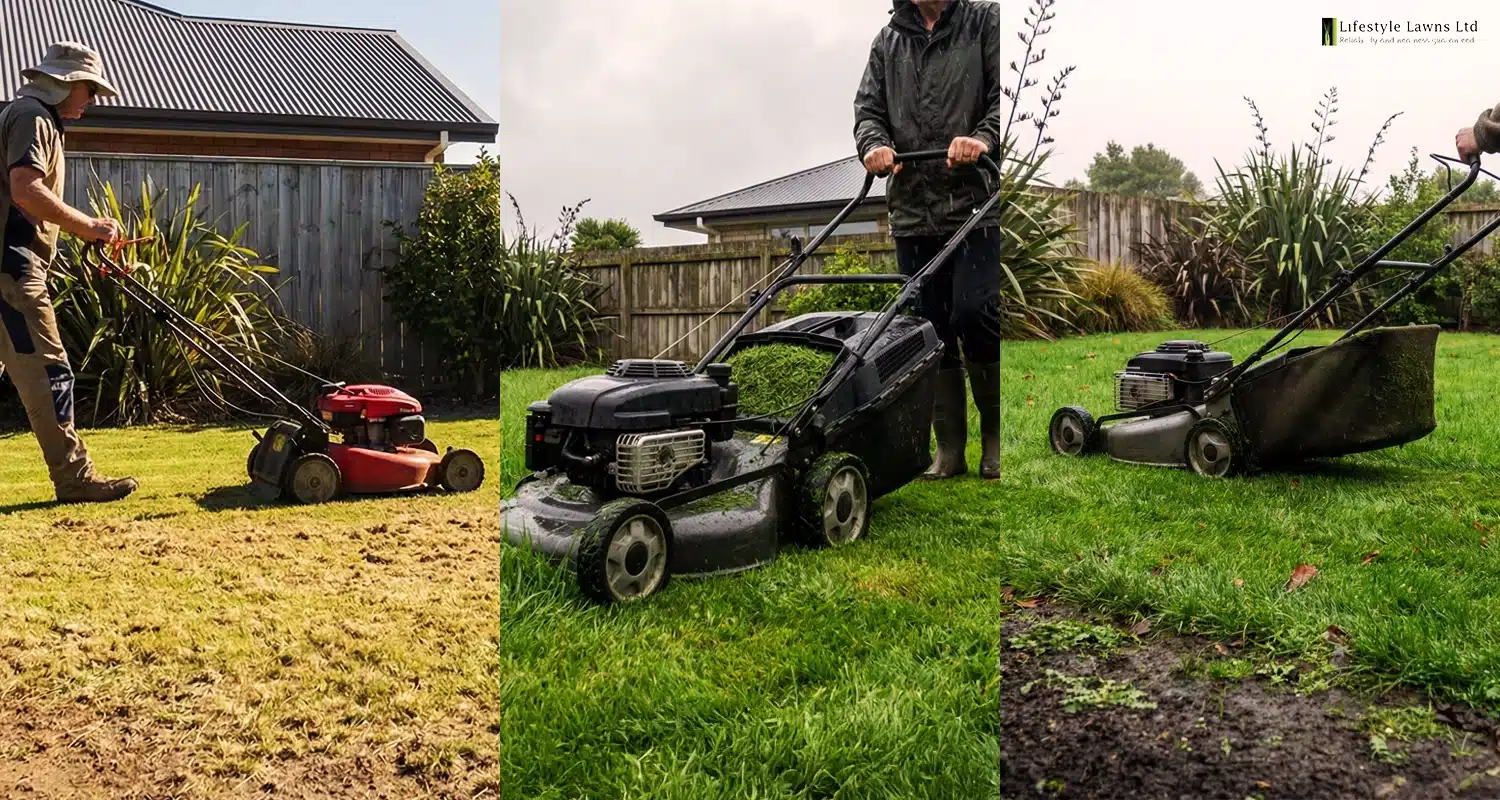
Lawn care changes throughout the year based on weather and grass growth. Adjusting your mowing method can help keep your lawn healthy in every season.
Summer: Mulching for Drought and Hot Weather
Dry summer conditions in New Zealand make moisture harder to retain in the soil. Mulching helps by leaving small clippings that protect the grass and reduce water loss. This light cover keeps the roots cooler and supports better lawn health.
Very dry or brittle grass might not mulch well. Dead clippings can build up and smother the lawn instead of breaking down. Mow carefully during dry spells and avoid thick layers of clippings.
After Rain: Managing Growth Surges
Heavy rain often causes fast lawn growth. Thick grass makes it difficult for mulching to spread clippings evenly. Catching helps manage the volume and keeps the lawn tidy.
Trying to mulch long, wet grass leads to clumps and poor results. The mower can clog, and the grass underneath might become damaged. Cut and clear first, then return to lighter mulching once the lawn recovers.
Cooler and Wetter Periods
During colder months or in wetter areas, lawns grow slowly, and the ground stays damp. Mulching often doesn’t work well in these conditions. Clippings may sit too long and encourage rot or disease.
Catching removes excess growth and helps avoid lawn problems in wet weather. You won’t need to mow as often, but regular care still matters. Wait for dry days if mulching is needed; stick with catching to manage moisture.
When To Call A Lawn Mowing Pro
Sometimes lawn care becomes too difficult to manage on your own, especially when growth gets out of hand or the weather isn’t ideal. Getting help from a professional can save time and prevent damage to your grass. Below are common signs that it’s time to call in a lawn mowing expert:
- Overgrown or Uneven Grass: When your lawn grows too tall, catching becomes hard, and mulching is no longer effective.
- Missed Several Weeks: A pro can handle long grass without harming your lawn and get it back into shape faster.
- Fast Growth After Rain: Professionals manage thick, wet grass safely and avoid mower blockages.
- Busy Schedule: Regular help means a neat lawn without needing to plan or do the work yourself.
- Changing Seasons: Experts know which method suits the weather and can spot issues early, like weeds or poor drainage.
Bringing in a professional gives peace of mind and a more consistent result across the year. It’s a simple solution when mowing becomes too hard, too time-consuming, or just not possible with your equipment.
Get Help With Lawn Mowing In NZ
Before picking between a mulcher or catcher, think about your available time and the look you prefer for your lawn. Mulching is quicker but needs frequent mowing and may not look as tidy, especially on long or wet grass. Catching gives a cleaner finish but takes more time and adds extra work with clippings.
Lifestyle Lawns can take care of it all with reliable mowing help across New Zealand. Whether you’re short on time or unsure about the best method, let the experts handle the weather, lawn condition, and finish. You’ll enjoy a neat, healthy lawn without the stress or second-guessing.
Mulching vs Catching Grass: FAQs
Understanding the difference between mulching and catching can help you take better care of your lawn. Below are answers to common questions to guide your mowing decisions.
Which Is Better When Mowing the Lawn?
Both methods work well, depending on the weather and how often you mow. Dry, short lawns suit mulching, while taller or wet grass is better caught and cleared.
Should I Mulch or Catch Grass Clippings for a Cleaner-Looking Lawn?
Catching gives the cleanest finish because all clippings are removed. Mulching can still look neat if the grass is dry, short, and mowed often.
Can I Mow the Lawn Without a Catcher?
Yes, but it works best with a proper mulching blade and plug installed. Without that setup, clippings may clump and leave a messy finish.
Is Mulching Grass Good for the Lawn?
Mulching helps feed the soil and hold in moisture when done in the right conditions. Avoid doing it when the grass is wet or too long to prevent damage.